Decoding the Global Surge in Thermos Bottle Demand
Beyond Just Keeping Coffee Hot
Importers often scan for the next reliable commodity. The thermos bottle market is not just stable; it’s evolving rapidly. Consumers now demand versatility, so the standard metal cylinder no longer suffices. You need to identify products that merge insulation technology with lifestyle needs, because that’s where the volume lies. A thermos bottle today must perform for both hot soup and iced kombucha, and this dual-use drives repeat orders. We see a clear shift from seasonal items to year-round essentials, and this expands your selling window significantly. It’s a low-risk inventory play, but only if you pick the right features.
Material Matters: Why 304 Stainless Steel Is Your Safest Bet
The Coating Trap That Costs You Refunds
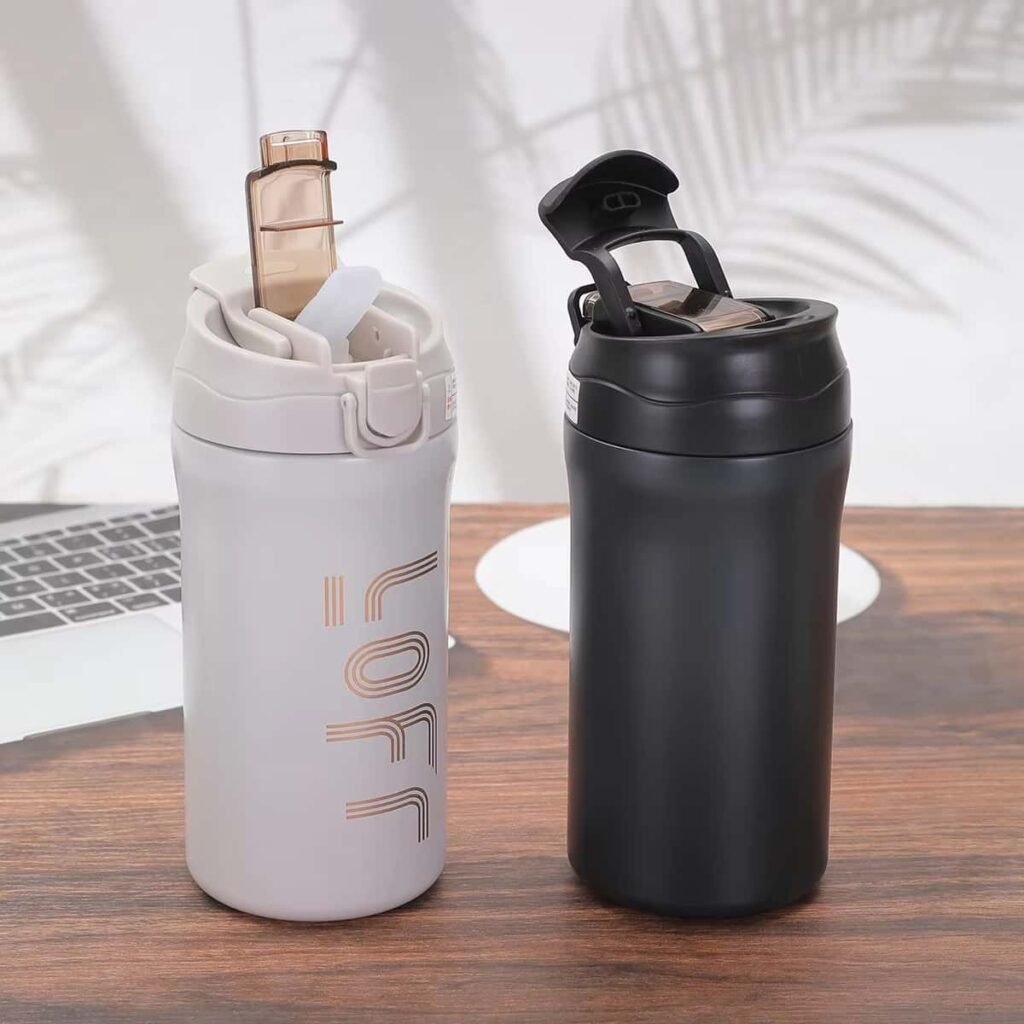
Every importer fears the returns due to rust or taste transfer. So, focusing on material grade is critical. A true thermos bottle uses 304 stainless steel for the interior, but cheaper variants use 201, which corrodes. You must specify double-wall construction and copper lining, because these are the non-negotiable standards for serious buyers. Furthermore, the exterior coating determines shelf appeal. Powder coating lasts longer than glossy paint, so prioritize durability over flashiness. Your supplier should provide mill certificates, and you should verify them, because a failed batch destroys your buyer relationships instantly.
Navigating the 2023-2028 Sales Trajectory
The Hydration Economy Is Booming
Let’s look at hard data. The global shift towards reusable products has accelerated. We project a steady 6.8% CAGR for insulated containers. For importers, this means the thermos bottle category offers better hedge against economic dips compared to fashion goods. People postpone clothing purchases, but they buy a reliable thermos bottle for daily commutes. So, your purchasing strategy should align with the back-to-office trend and the outdoor recreation boom. Stocking mid-sized 17oz to 24oz models covers the widest demographic, because they fit both car cup holders and backpack side pockets.
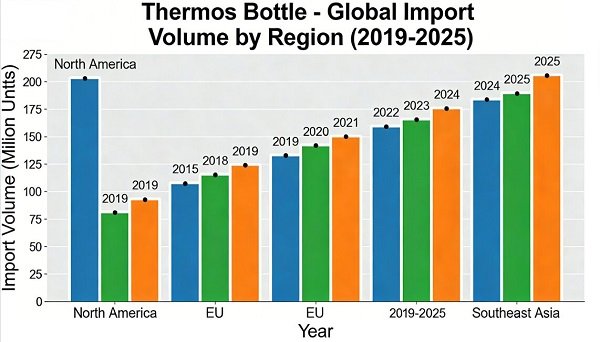
Thermos Bottle – Global Import Volume by Region (2019-2025)
The Hidden Costs: Logistics and Certification Traps
Why FDA and LFGB Are Not Optional
You might find a great price on a thermos bottle, but the logistics cost can kill the deal. Because of their air-filled insulation, they are lightweight but bulky. This dimensional weight impacts shipping rates heavily. Negotiate with freight forwarders on CBM, not just weight. Additionally, coatings and silicone seals require specific certifications. The EU bans certain BPAs and lead levels in print, so ensure your factory tests these. Many importers lose shipments at customs because they overlooked the paint composition. A thermos bottle destined for school kids needs extra safety checks, and you must budget for that.
Sourcing Strategies: Factory Audits vs. Trading Companies
The MOQ Dilemma Solved
Working directly with factories offers better margins, but they demand high MOQs. If you are testing a market, consider specialized trading houses that aggregate small batches. They offer mixed containers of various thermos bottle styles and colors. This allows you to test which designs—like the chug-cap or the French press top—actually sell. However, for large retail chains, direct factory sourcing is mandatory because you control the quality and the intellectual property of custom molds. So, align your sourcing channel with your end-client’s size.
Future-Proofing Your Inventory with Smart Features
Temperature Display and Infusers
The standard thermos bottle is being upgraded with tech. Lid-integrated temperature displays are no longer a gimmick; they are a feature for parents and coffee enthusiasts. Also, fruit infuser rods for flavored water are trending in Asia and now entering Western markets. Importers who bring these hybrids capture the health-conscious spender. Because they perceive higher value, they pay a premium. So, when you travel to the Canton Fair or source online, filter for these innovative features, not just basic insulation. They ensure your catalog stays relevant.
Mitigating Risk with Pre-Season Testing
The Ice Cube Test Standard
Before placing a massive order, conduct simple tests. Fill a sample thermos bottle with ice cubes and check after 24 hours. Real vacuum insulation retains ice. Many suppliers cheat with foam inserts that fail quickly. So, perform this test on multiple samples from different vendors. Document the results with photos for your clients later. This builds trust, because you provide proof of performance. This due diligence protects your capital and ensures you are not importing a product that will generate consumer complaints six months down the line.